Hire Python Developers in India: Dedicated and Remote
Hire Python developers from our Jaipur team to work as part of yours: Django, FastAPI and AI/LLM engineers on monthly or hourly engagements. You interview them before they start, the code lives in your repository, and you scale up or down as your roadmap changes.
- Team in Jaipur, India
- MSME & GST registered
- Live product demos you can try
When you hire Python developers through Ezibell Tech, you get engineers from a Python-first company rather than names from a recruiter’s database. Our team works with Django, Django REST Framework, FastAPI, Celery, PostgreSQL and AWS, and on LLM applications — RAG systems, agents and integrations with OpenAI, Claude and open-source models. A team lead stays involved in every engagement, reviewing code and helping with design, so each developer has a senior engineering team behind them.
Engagements fit how you work. A dedicated Python developer joins your stand-ups, works in your Git repository, issue tracker and Slack or Teams, and reports to your product owner. A part-time or hourly arrangement suits maintenance, integrations and bursts of work. For larger goals we form a small pod — developers plus a lead, with design or QA when needed. Offshore Python developers in India also give UK, European, Middle East and Australian teams useful working-hours overlap, and US teams a clean hand-over rhythm.
We are deliberate about what we offer. Our AI work is LLM and generative AI engineering — retrieval, agents, tool use, evaluation and production hardening — not classical machine learning or data science, and we will tell you if your project needs a skill we don’t have. Ezibell Tech is an MSME (Udyam) and GST-registered company in Jaipur, so you contract with a registered business, with an NDA and IP assignment, rather than with an individual freelancer.
Python developers you can hire
Django and DRF developers
Developers for Django monoliths, REST APIs with Django REST Framework, admin customisation, multi-tenant SaaS, Celery background jobs and PostgreSQL performance work — on new builds, or taking over an existing codebase from another team and cleaning it up safely.
FastAPI and async specialists
Async APIs, microservices, WebSockets, high-throughput integrations and AI back ends with FastAPI, Pydantic and SQLAlchemy, deployed in Docker on AWS, with automated tests, sensible timeouts and retries, and OpenAPI documentation your front-end and mobile teams can rely on.
AI/LLM developers
Engineers who build RAG chatbots, AI agents with LangGraph and tool calling, MCP servers, document extraction pipelines and LLM evaluation, using OpenAI, Claude, Bedrock and open-source models, with pgvector or Qdrant for retrieval and evaluation sets to prove quality.
Integration developers
Python developers for payment gateways (Razorpay, Stripe, UPI AutoPay), WhatsApp Business API, Twilio, Zoom, OAuth logins, CRMs and webhooks between systems, with signature checks, idempotent handlers, retries, logging and monitoring included as standard rather than added after the first incident.
Python + AWS engineers
Developers comfortable with Lambda, Step Functions, ECS on Fargate, S3, RDS and DynamoDB, who containerise apps, write CI/CD pipelines, set up monitoring and keep cloud costs in check alongside their application work, so you don’t need a separate DevOps hire on day one.
Remote Python team pod
Two or more developers with a team lead — plus design or QA if needed — for a product or module you want delivered end to end, with sprint planning, demos and a single point of contact on our side.
Hourly and part-time engagement
A block of hours each month for maintenance, bug fixes, upgrades and small features on an existing Python application, with a shared backlog, agreed priorities and transparent time logs so you see where every hour went.
How to hire Python developers without the usual risks
Offshore hiring tends to go wrong in predictable ways: the developer interviewed is not the one who turns up, code sits on the vendor’s servers, nobody reviews quality, and the client can’t see what was done each week. We design engagements around those failure points. You interview the developer you will actually work with. Code goes into your repository from the first commit. A team lead reviews pull requests. And you get written weekly updates, not just invoices.
The first two weeks matter most. We agree access, coding standards, branching and review rules, plus a small first task that touches your real codebase, so both sides see how the collaboration works before scaling up. If the fit isn’t right, tell us early and we will discuss a change of developer or of plan. Clear expectations at the start are far cheaper than a polite month of drift.
- Interview the actual developer, not a sales profile
- Your repository, your cloud accounts, your credentials policy
- NDA and IP assignment signed before access is granted
- Team-lead code review on every engagement
- A weekly written update: done, next, blocked
Engagement models compared
A dedicated developer by the month suits ongoing product work: they learn your domain, carry context between sprints and become part of your team. Hourly engagement works when demand is uneven — maintenance, small integrations or a backlog that comes and goes — and you want to pay only for time used. A fixed-price project fits a well-defined deliverable such as an MVP or a single integration, where outcome and deadline matter more than who writes each line.
A common pattern combines them: a fixed-price project to build the first version, then a dedicated developer to carry it forward, with hourly support during quieter periods. Whatever the model, the agreement spells out notice periods, how scaling up or down works and what happens to knowledge when someone moves on — documentation, hand-over sessions and an overlap period whenever we change developers.
- Dedicated monthly: continuous product work with full-time focus
- Part-time or hourly: maintenance, integrations, uneven demand
- Fixed-price: a defined deliverable with a deadline
- Team pod: a module or product delivered end to end with a lead
Hiring AI/LLM developers: what to check
‘AI developer’ now covers everything from prompt tinkering to production systems. For LLM applications the skills that matter are mostly engineering: retrieval designed so answers are grounded in your data, structured outputs validated against schemas, agents with limited and audited tool access, evaluation sets that catch regressions when you change a prompt or model, and controls on cost and latency. Ask candidates how they measure answer quality; the answer tells you a lot.
Our AI/LLM developers work in Python with LangChain, LangGraph, MCP, pgvector or Qdrant, and model APIs from OpenAI, Anthropic and AWS Bedrock, plus open-source models where data must stay in your environment. They build on solid back-end foundations — Django or FastAPI, queues, logging, access control — because AI pilots often stall on engineering gaps rather than on the model. Your data stays yours — never used to train public models.
How we work
- 1Share your requirement
Tell us the stack, the work, the seniority you need, the overlap hours and how long you expect the engagement to run. A short call is usually enough.
- 2We propose developers
We suggest developers from our team whose experience matches, with a summary of relevant work, the skills they would bring and who would lead them.
- 3You interview
Interview the developer directly — a technical discussion, a code walk-through or a short exercise, whichever you prefer. You decide whether to proceed, with no obligation.
- 4Agree terms and start date
Engagement model, hours, overlap window, notice period, NDA and IP assignment are agreed in writing, and we confirm a realistic start date before you sign.
- 5Onboarding
Access to your repository, tools and environments, a walkthrough of your codebase, and a first real task in week one so both sides see how it is going.
- 6Review and scale
Weekly written updates, a monthly review with you and our team lead, and adjustments as needed — adding developers, reducing hours or changing focus as your roadmap moves.
Why teams choose us
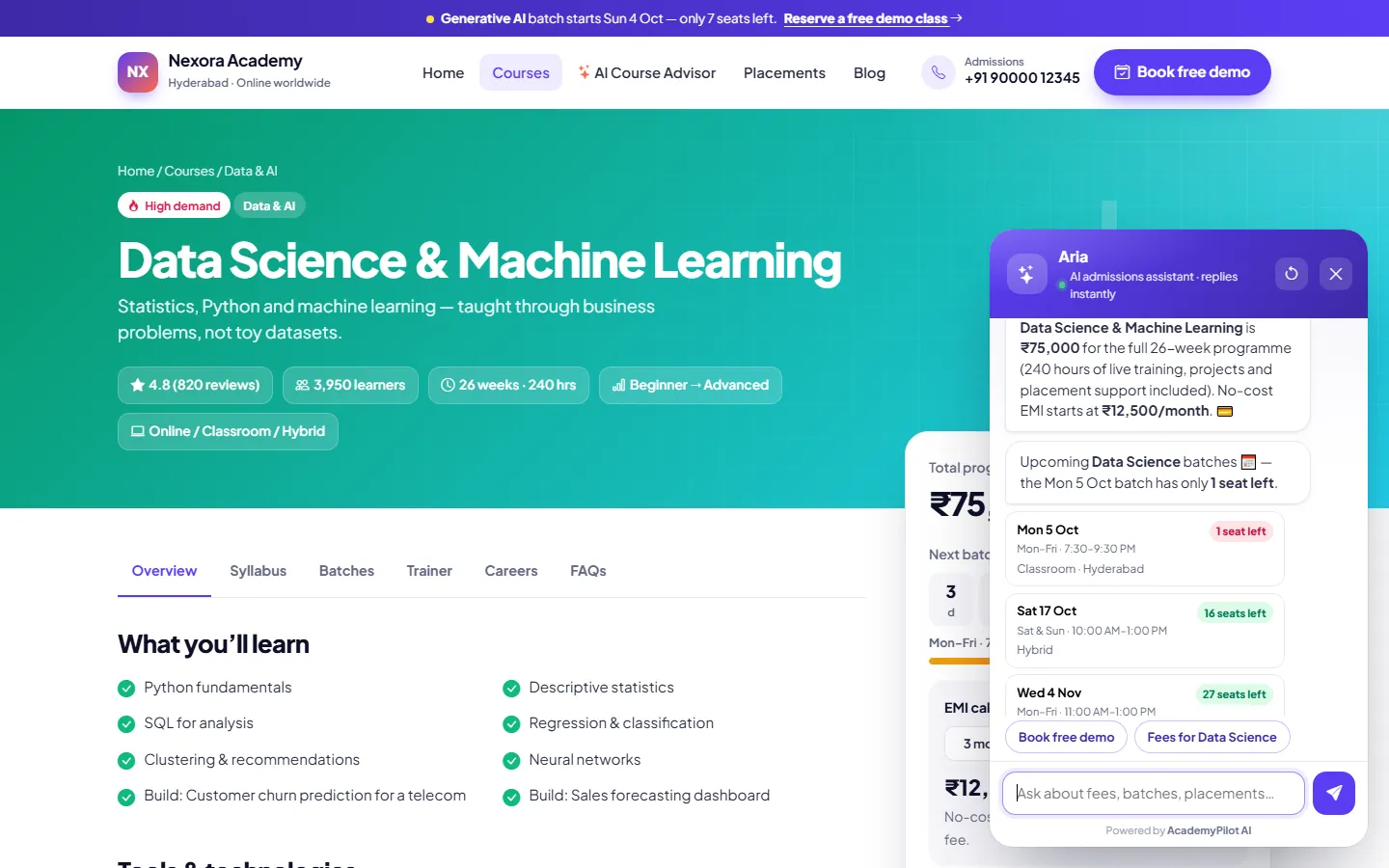 AcademyPilotAI admissions chatbot, AI course advisor, lead CRM with AI scoring and an AI blog writer — the same mix of LLM features and business logic our AI/LLM developers bring to client teams.Open →
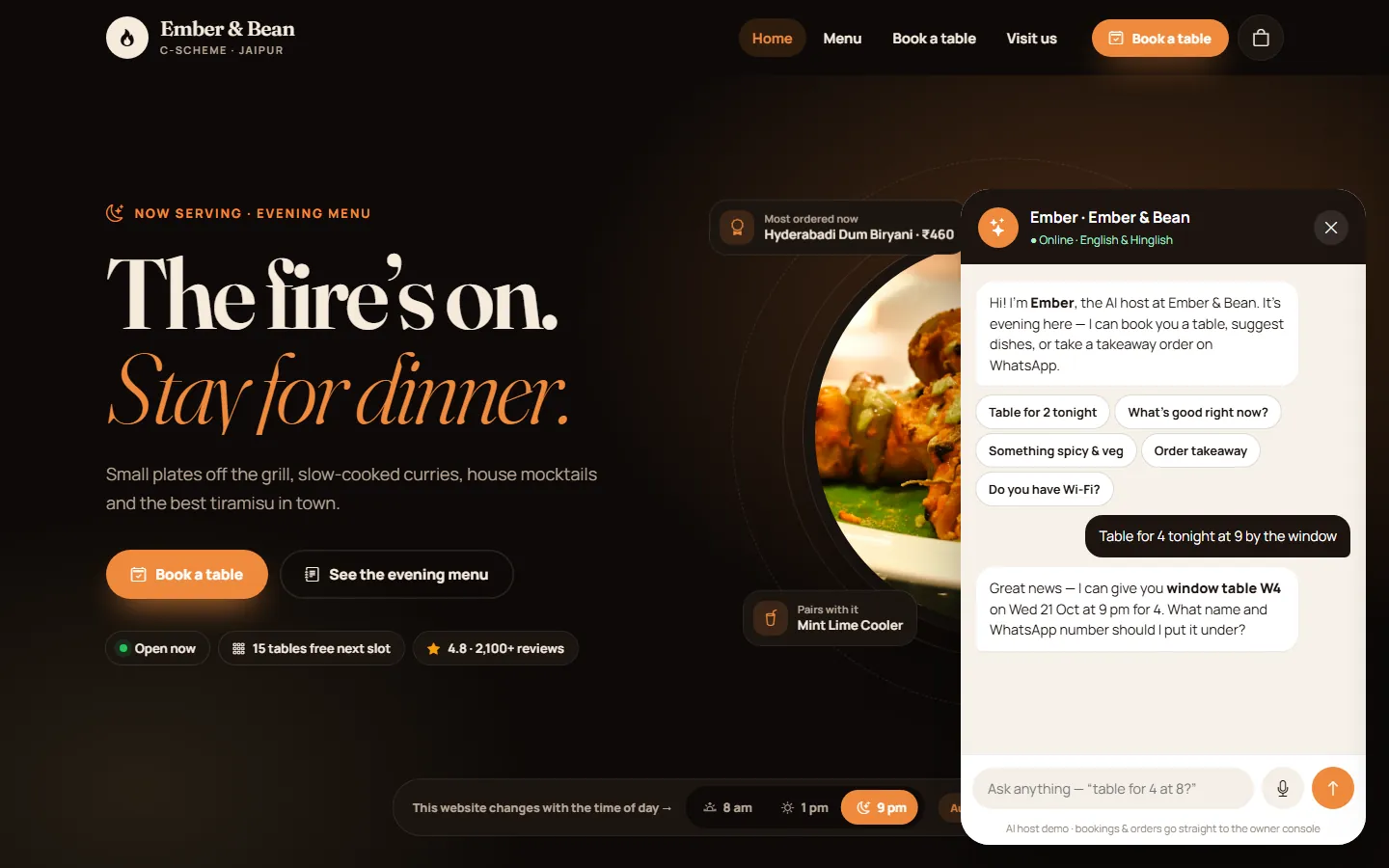 DinePilotAn AI host that handles table bookings on a live floor plan and WhatsApp takeaway orders in English and Hinglish — conversational AI wired to real business actions.Open →
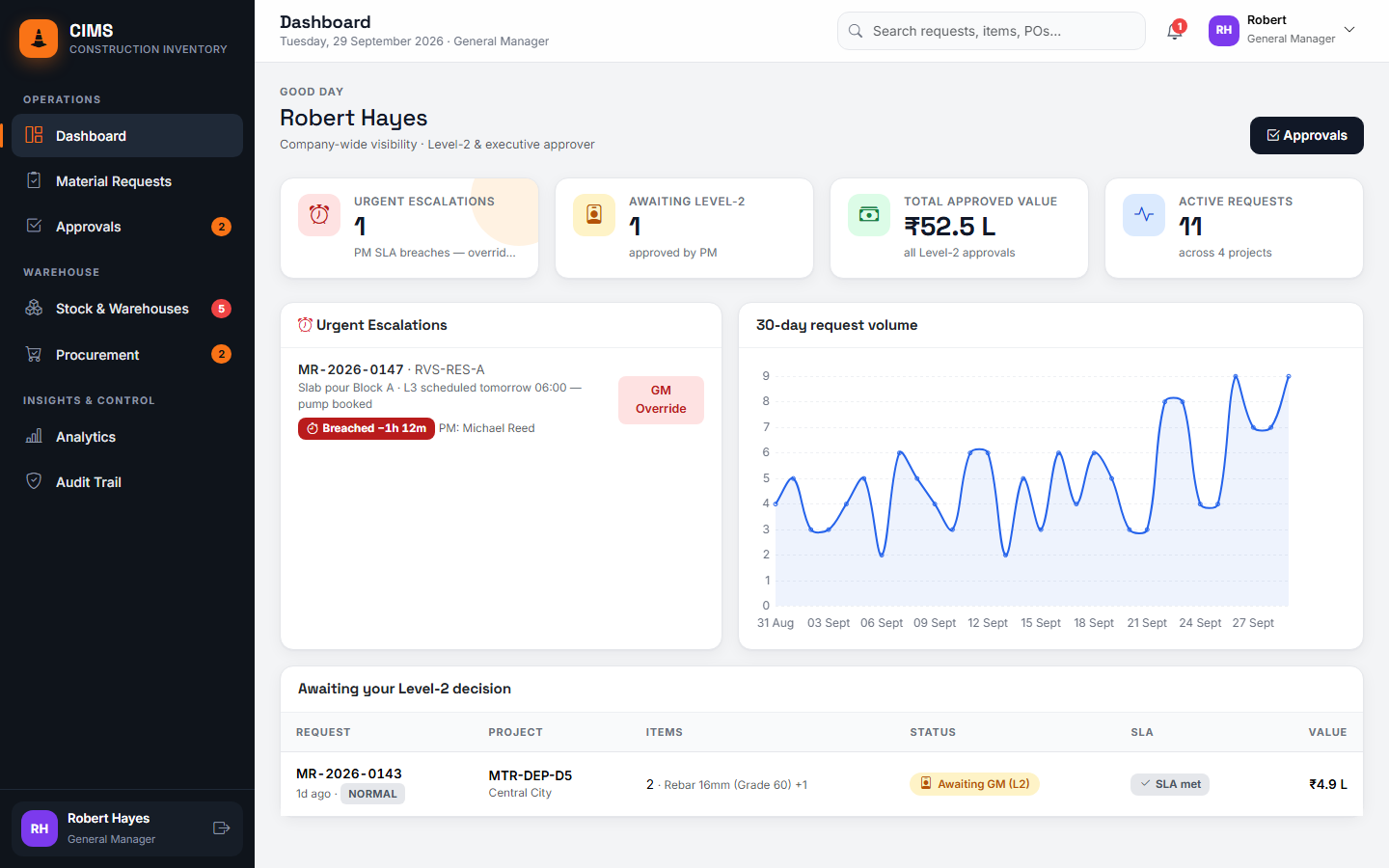 CIMSConstruction inventory with approval chains, SLAs, stock, dispatch, site receipt and audit across eight role cockpits — the workflow-heavy business logic our back-end developers handle every day.Open →
Our stack for this work
Cost to hire Python developers: what drives it
We don’t publish rate cards, because the right price depends on what you need. These factors set the monthly or hourly rate; share your requirement and we send a clear quote before anyone starts.
A senior developer or team lead who can make architecture decisions costs more than a mid-level developer working to a defined plan.
AI/LLM engineering, complex integrations or AWS-heavy roles are priced above general Django or FastAPI work.
Full-time monthly engagements over a longer term are priced differently from short or hourly work.
Standard IST hours are simplest; extended overlap for US or other distant time zones is factored into the rate.
A single developer, a developer with lead oversight, or a full pod with design and QA each carry a different cost.
Hire python developers: questions people ask
What is the process to hire a Python developer?
Share your stack, the work, the seniority, overlap hours and expected duration. We propose developers from our team with relevant experience, you interview them directly, and we agree engagement terms, NDA and IP assignment in writing. After onboarding, the developer starts on a real task in week one, and you get weekly written updates and a monthly review.
How much does it cost to hire Python developers from India?
Cost depends on seniority, specialism (AI/LLM and AWS-heavy roles cost more), commitment — dedicated monthly, part-time, hourly or fixed-price — and how much time-zone overlap you need. We don’t publish a rate card; share your requirement and we quote a clear monthly or hourly rate before anyone starts.
Can I interview or trial developers before committing?
You can interview the developer before they start, in whatever format you prefer: a technical discussion, a code walk-through or a short exercise. The engagement also begins with a small real task in your codebase, so both sides can see how the collaboration works. If the fit isn’t right, tell us early and we’ll discuss a change.
Do I retain full ownership of the source code?
Yes. Code is written in your repository from the first commit, and the contract assigns intellectual property in the work you pay for to your company. We sign an NDA before access is granted, use your cloud accounts where possible and don’t build on proprietary frameworks that would tie you to us.
How quickly can a developer join, and can we scale?
It depends on the profile and current availability, so we confirm a realistic start date before you sign rather than promising a fixed number of days. Scaling up or down follows the notice terms in the agreement, and when developers change we plan a hand-over with documentation and overlap so knowledge isn’t lost.
Can your Python developers work on AI projects?
Yes, within LLM and generative AI engineering: RAG chatbots, AI agents with tool use, MCP servers, document extraction, LLM evaluation and integration with OpenAI, Claude, Bedrock and open-source models. That is what our AI/LLM developers do. We don’t offer classical machine learning or data-science roles, and we will say so if your project needs them.
What time-zone overlap and reporting do you offer?
Our team works on India Standard Time, which overlaps well with the UK, Europe, the Middle East and Australia, and allows a morning or evening overlap with the US. We agree core overlap hours per engagement. Developers join your stand-ups and channels, and you get a weekly written update covering completed work, next steps and blockers.
Why hire Python developers from a company rather than freelancers?
A company gives you continuity and oversight. Our developers work with senior team leads who review code, cover absences and keep standards consistent, and you contract with a registered business with clear IP terms and GST invoices. If a developer moves on or the scope changes, the knowledge and the responsibility stay with us, not with one person.
Hire a Python developer for your team
WhatsApp or call +91 63774 18934, or email team@ezibelltech.com with your stack, the work and the seniority you need. We’ll propose developers you can interview and a clear quote.